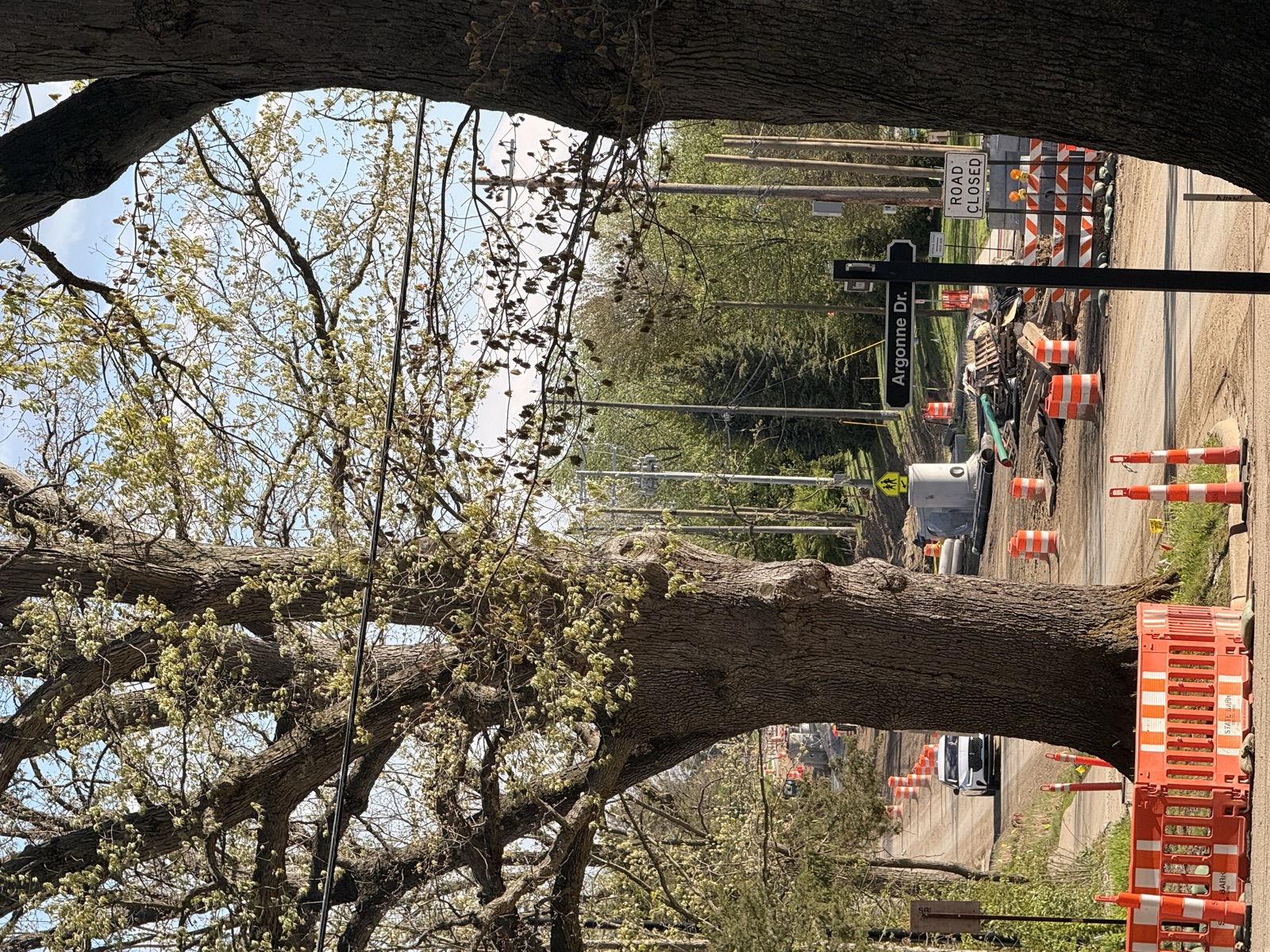
Argonne Drive at Nixon Road, northeast Ann Arbor — the entrance to Northbury.
Every year since roughly 1708 each of these trunks has written one line in its own wood, wide in a wet year and narrow in a dry one. That date is an estimate from girth and nothing more — no one has read the rings, which is the only thing that would settle it, and a core is one of the four things asked for below. Estimated or not, this stand is the oldest record of this corner of Ann Arbor and nobody has read it. I want these trees to go on, and I want their successors in the ground while they are still alive to seed them.
What I have asked the city for, in writing: an arborist to look at the severed roots and the fungus at the trunk together; the ordinary aftercare for a root-damaged oak carried out now rather than filed — mulch over the cut zone, water through drought, no fertiliser and no pruning for a season; the stand dated with an increment borer, which reads the rings without harming the tree; and bur oak seedlings and saplings planted on the trees’ own timescale, with a view to centuries. The abutting property owners’ cooperation is available and nobody has asked for it. Why now, when the digging has stopped: seedlings need these parents alive to seed them, and nobody knows yet how much this stand lost.
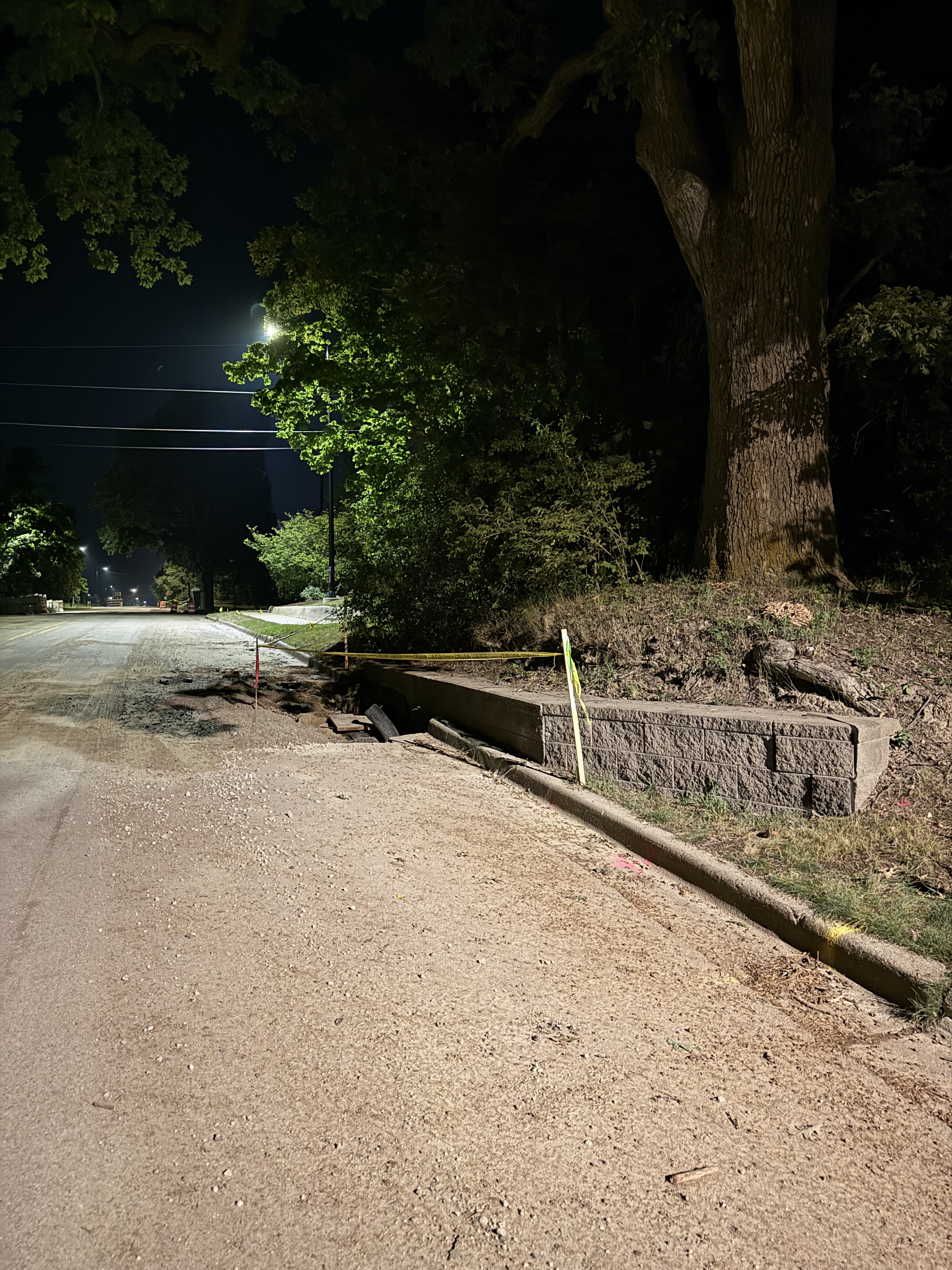
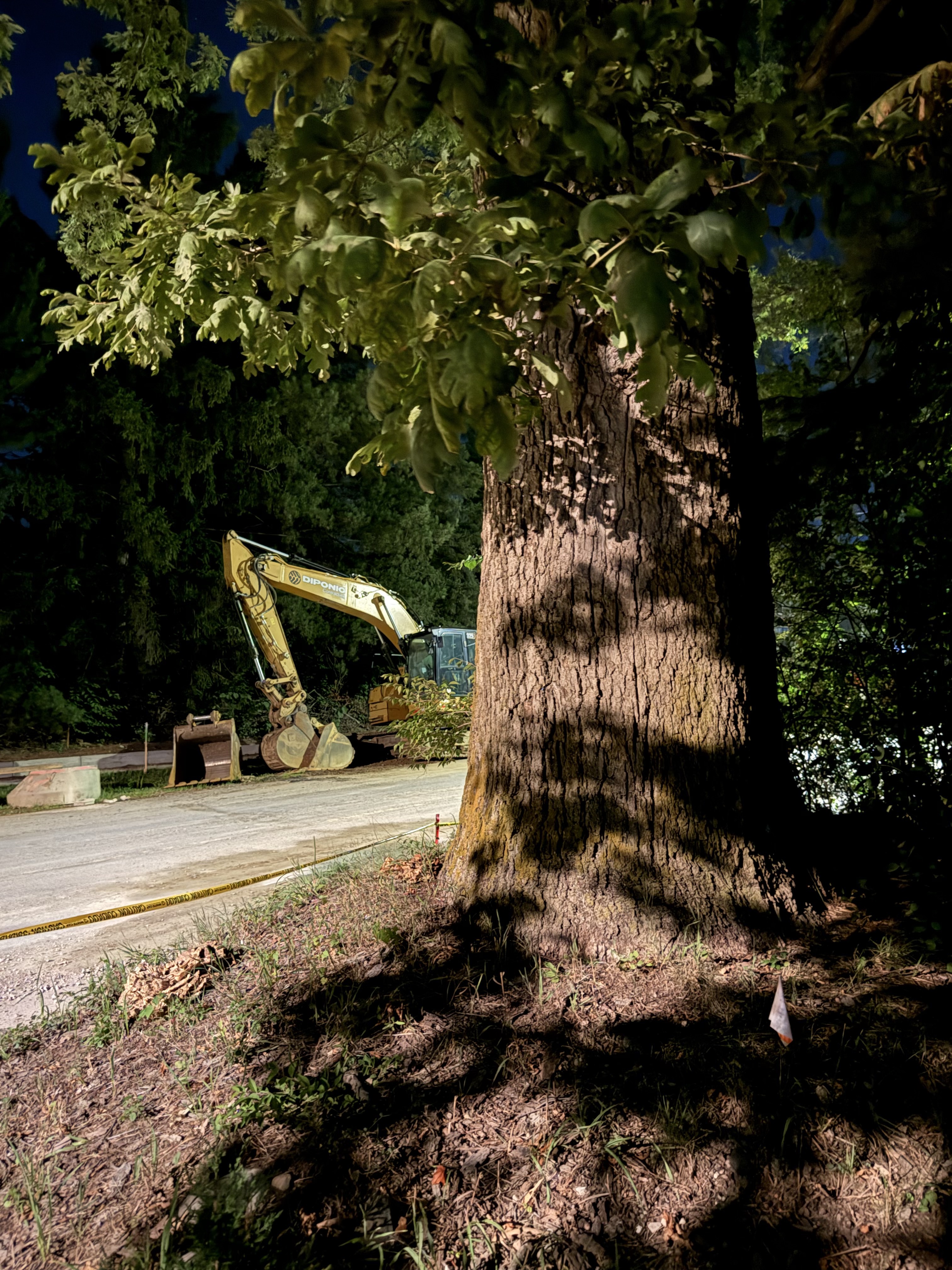
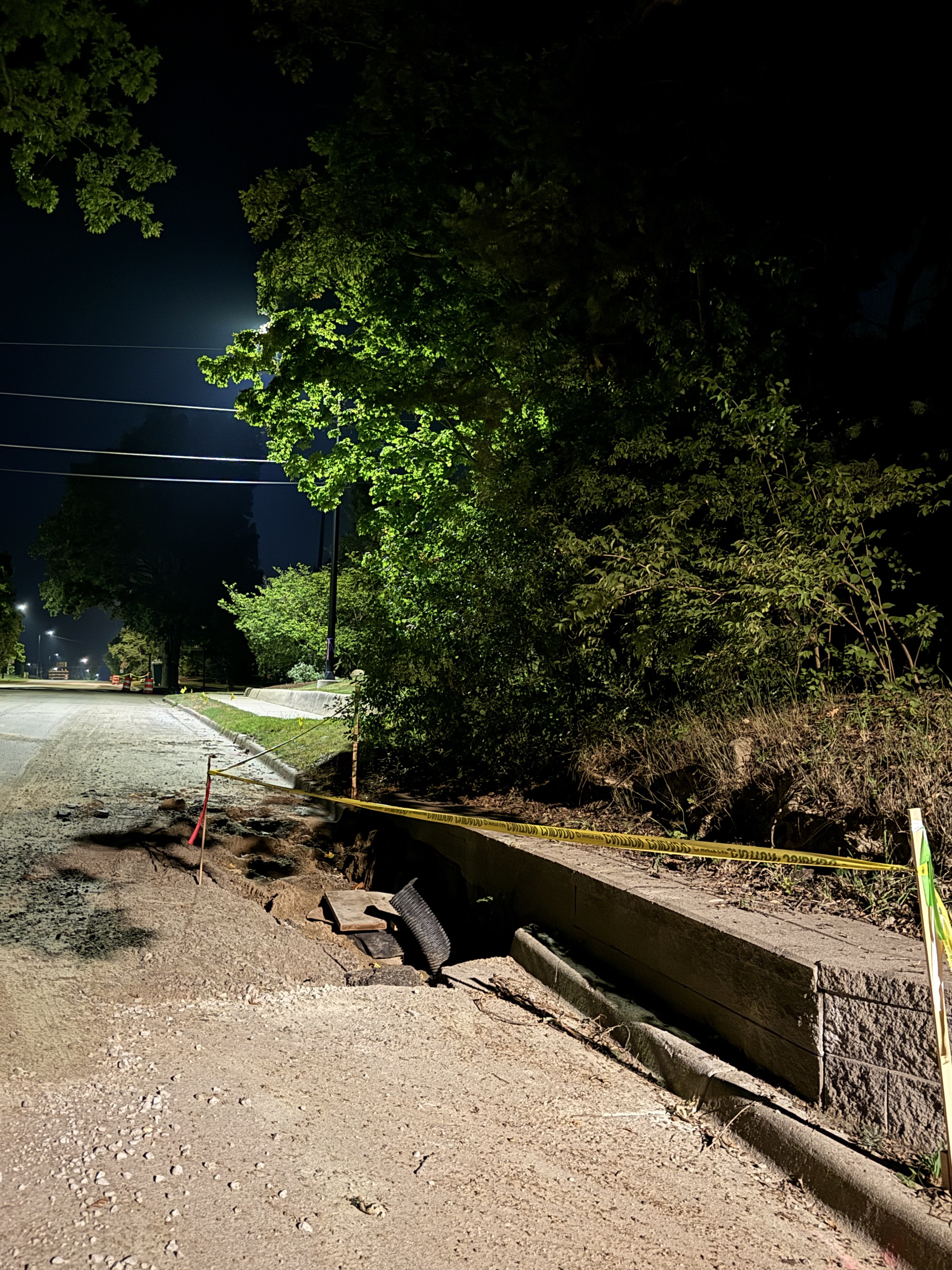
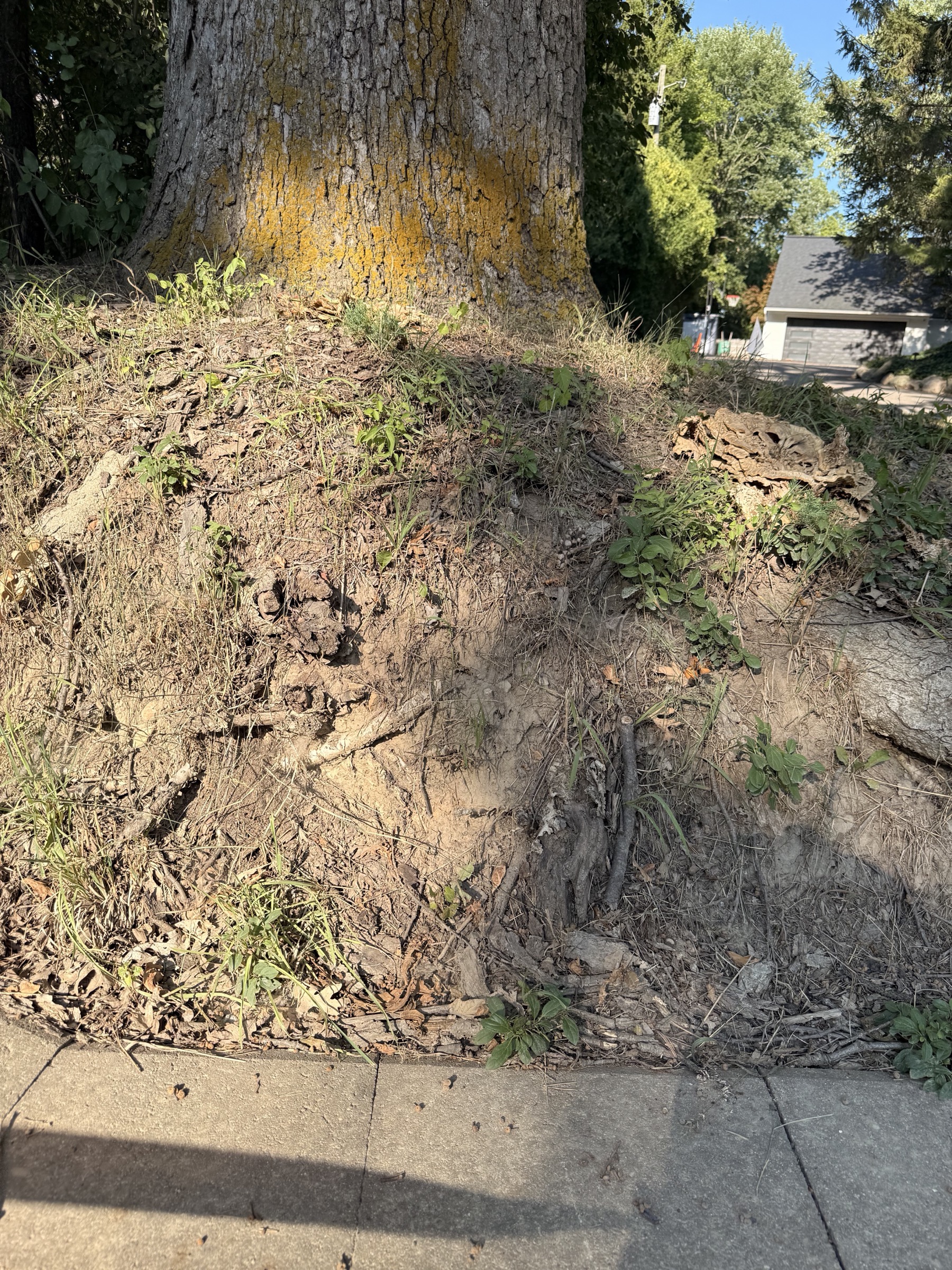
4 August. Root ends were cut beside the trunk of city tree 2688 on 2 August; the photographs are below. The City Engineer writes that staff and the City Forester found no evidence of substantial root disturbance. His letter does not mention the fungus.
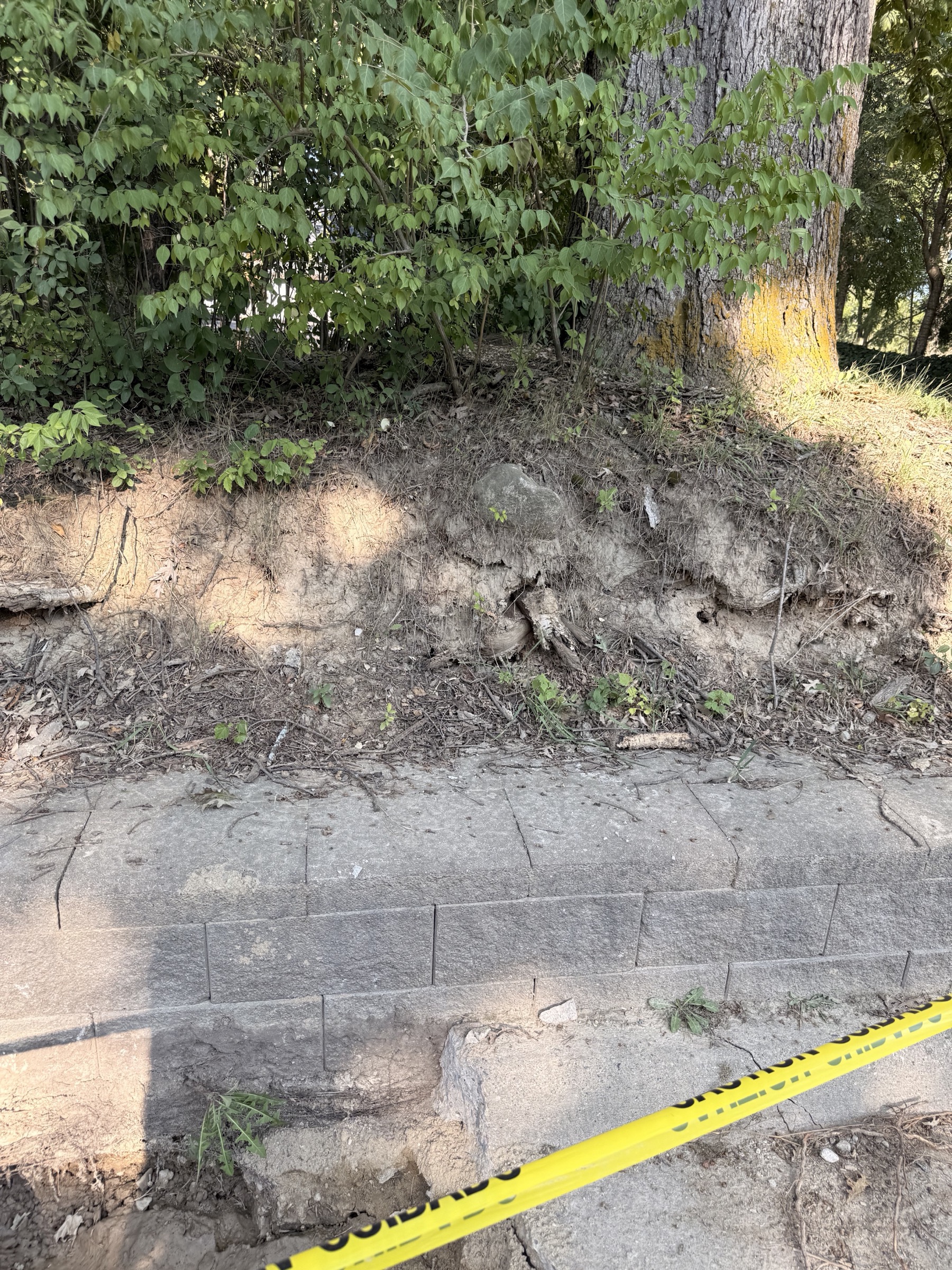
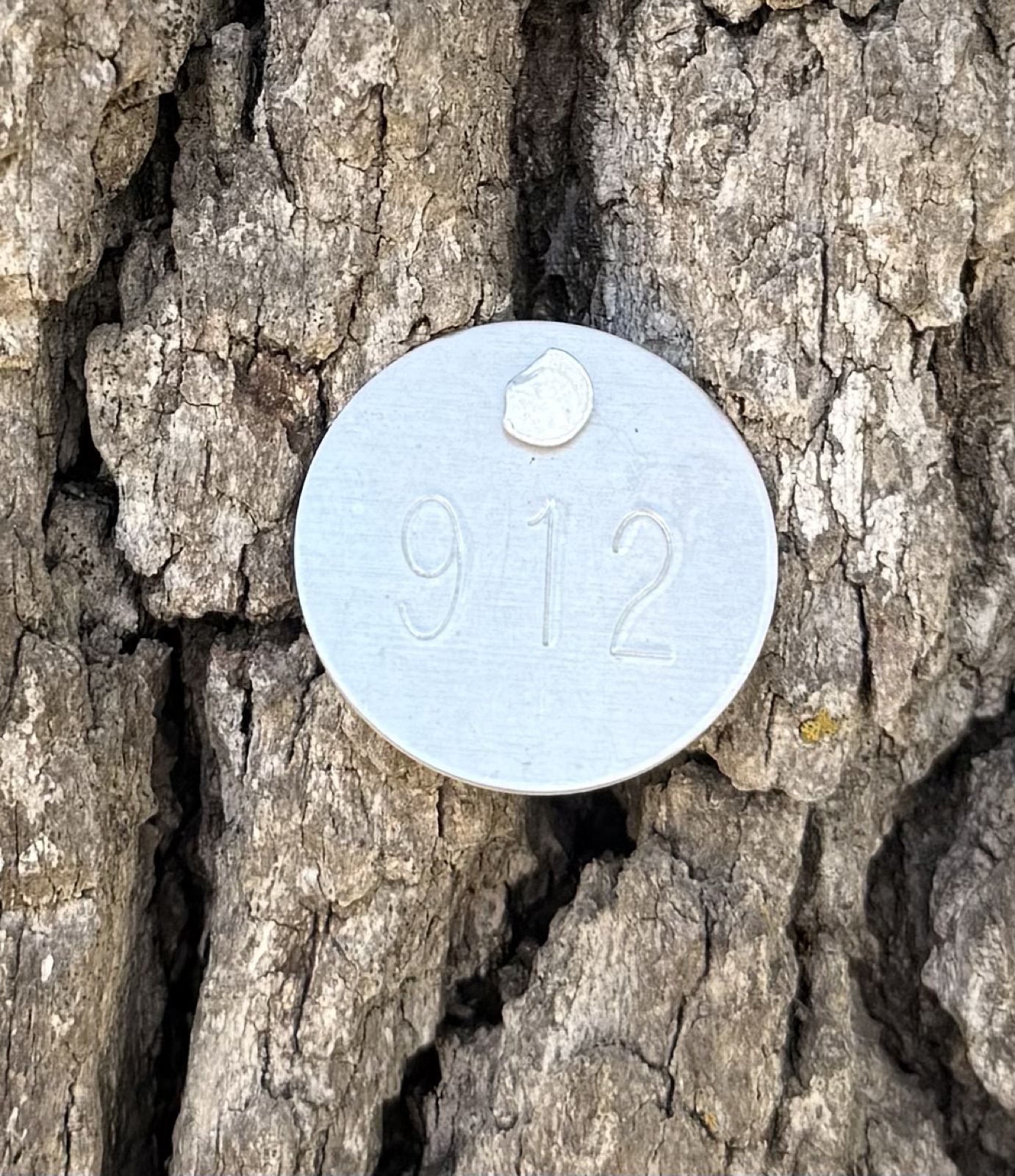
On the evening of Sunday 2 August a resident found an open excavation within feet of the trunk of one of the oaks, city tag 2688. The complaint went to the city at 3:29 the next morning. The cut face is inside the root zone that keeps the tree alive. Ann Arbor was named in 1824 for stands of bur oak exactly like this one. Five at this corner carry city inventory tags — 2688, 912, 913, 2685 and 2687 — and the stand has never been formally counted or measured. The city’s own inventory would settle it in an afternoon. Cutting inside the root zone at the trunk can kill a mature oak, and when it does it takes years rather than days, which is why nobody notices in time.
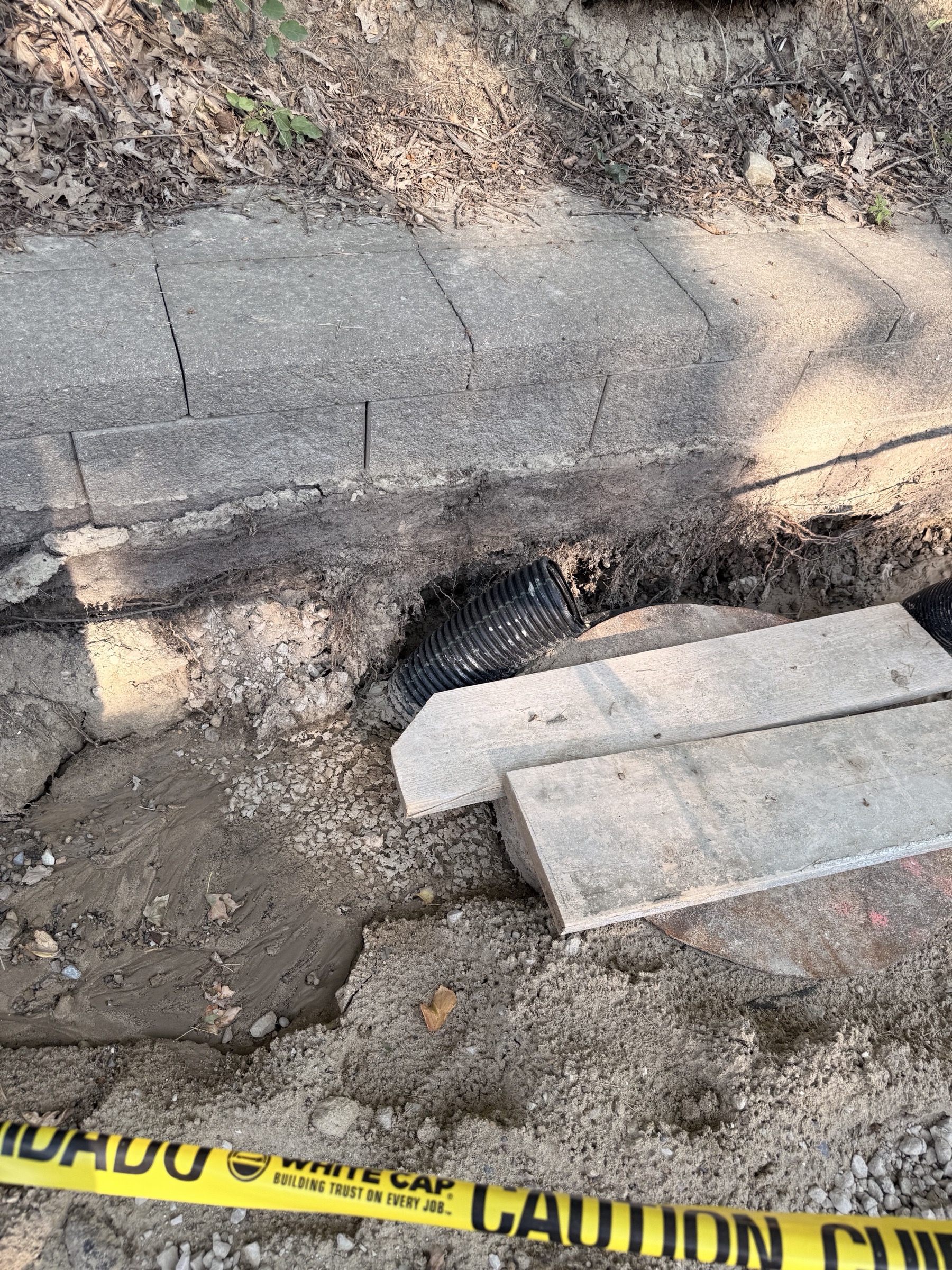
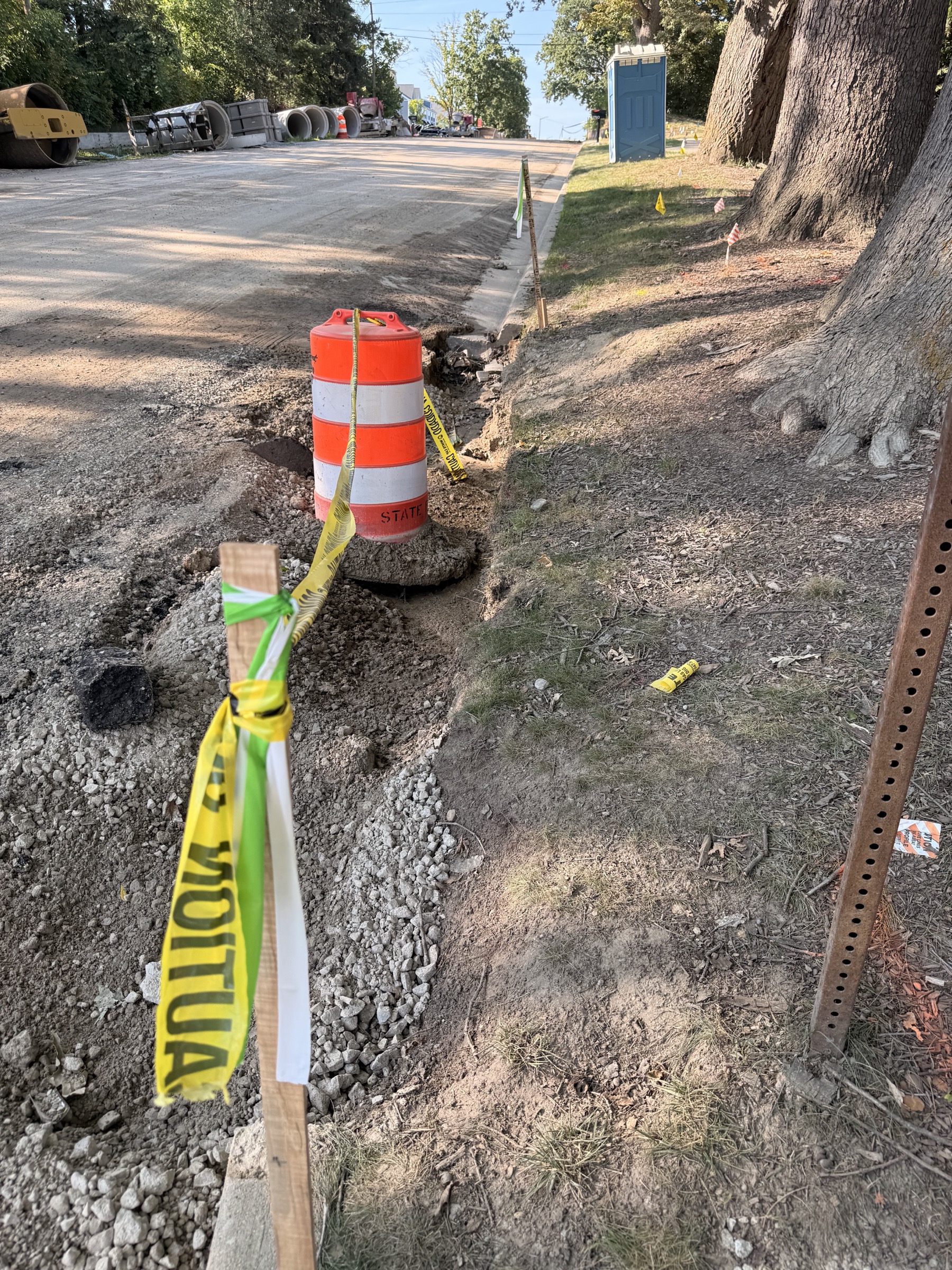
The trunk, its exposed roots on the bank, and the open hole at the curb. One frame, feet apart.Caution tape at the base of the tree. The machine is parked across the road from it.The excavation at the curb: cut face, drain pipe, and severed ground.
Monday 3 August, 6:06 pm · the work continued
Twelve hours after the city was told, the digging had moved down the row.
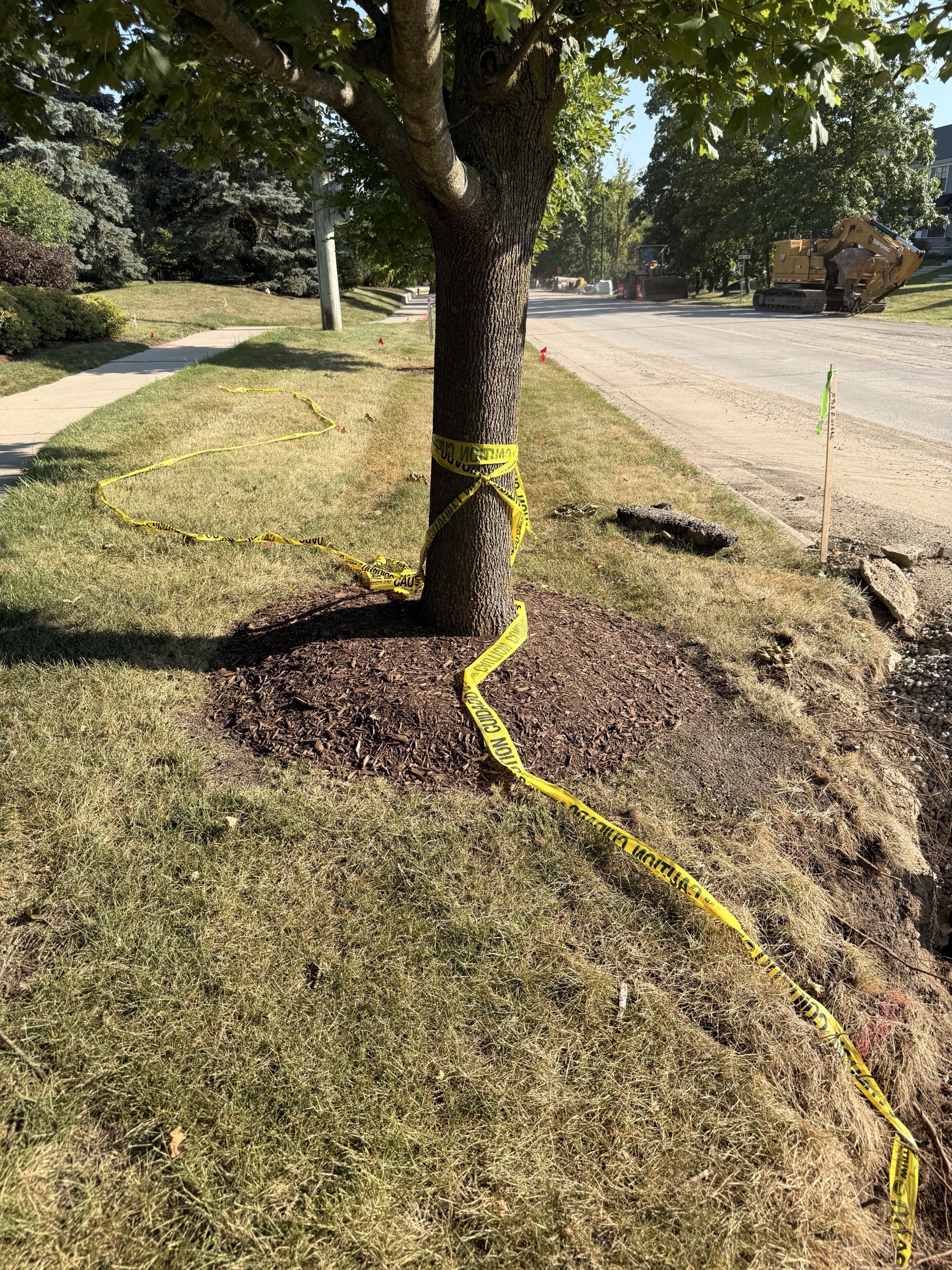
By Monday evening the cut ran along the bank beneath the oaks, with roots severed and left in the open air, and a second tree stood wrapped in caution tape a few feet from the excavator. None of this is in the frames taken before the complaint went in at 3:29 that morning. The May frames do not clearly show the retaining wall face, so they do not settle when the roots there were exposed. That was said to the city in writing.
Caution tape wound around a trunk, the machine up the road, and the cut edge of the verge beside it. Tape is not a root protection zone.The bank cut away below the oaks. The pale ends in the soil face are severed roots, left open to the air.Beside the trunk itself: cut root ends at the surface. The yellow on the bark is lichen, not paint.The trench undercutting the wall, drain pipe laid in, planks over the hole.The corridor looking north. The oak is at the right of the frame; the roller and pipe stock are staged ahead of it.
Photographs by a resident, 3 August 2026, 6:06 to 6:11 pm.
What the city says, and what it does not answer
Nicholas Hutchinson, City Engineer, wrote at 10:30 this morning. Staff and the City Forester inspected and “found no evidence that construction has caused substantial root disturbance”. The exposed roots at the retaining wall “existed long before construction took place”. The catch basin is complete. No further deep digging is expected this phase.
It does not mention the mushroom. It answers Monday's 3:29 am complaint, not the treatment letter sent at 8:10 the same morning. It is the City Engineer reporting the Forester's finding; the Forester's own note has not been produced.
Three questions went back at 7:28 tonight. Did the City Forester examine the mushroom, and on what date. What does the city rely on for the claim that those roots pre-date the work — a photograph, a dated note, or recollection. A finding of no disturbance is not a treatment plan.
The mushroom at the base of the trunk
A large fungal fruiting body stands in the ground inches from the trunk of tag 2688. Nobody has identified it. The abutting property owner reports being told it may signal disease in the root system, and has not said by whom. That is hearsay and it is published as hearsay; it is a reason to send an arborist, not a finding. No arborist has examined it on the record, and there is no photograph of it in the set held here, so nothing on this page shows it. The city's letter does not mention it.
The ask is one arborist looking at the severed roots and the mushroom together, and a plan carried out now.
City tag 912, photographed 9 May 2026.The same corner on 9 May, before the excavation. These frames do not clearly show the retaining wall face, so they settle nothing about it. That was said to the city in writing.
What you can do in two minutes
The city answered in writing this morning. It says its inspection found no substantial root disturbance. It does not mention the mushroom at the base of the trunk, it does not answer the treatment letter sent the same morning, and there is still no treatment plan. Those are the asks now.
Nixon Road is the boundary between Ward 1 and Ward 2 on the city’s own precinct map. Four councilmembers share this right-of-way and none represents it alone, which is the likeliest reason a landmark stand went unattended.
File it in writing, so it cannot be handed off. Use the city's Report a Problem tool or the A2 Fix It app, and choose street tree maintenance. You get a ticket number the city has to answer. Then email trees@a2gov.org, copying the city's urban forestry coordinator. Pre-written, and here it is in full so nobody sends words they have not read: “I am a Nixon Road resident. There is an open excavation within feet of the trunk of city street tree 2688 at Nixon and Argonne, inside its root protection zone. Please send Forestry to inspect it before work resumes, and hold excavation inside the root zone until Forestry has approved the method in writing.” It goes to A2 Trees (trees@a2gov.org), copying Tiffany Giacobazzi, the city’s urban forestry coordinator.
Do not bother phoning. On 3 August residents who called the city's published Forestry number were transferred both times to the construction project's own field engineer, which is the wrong direction: a contractor cannot order a hold on itself. The City Engineer has since given his own name and number in writing. Write anyway, because writing leaves a record.
Email the project team.Open a pre-written email to the city project manager and the two field engineers, copying Forestry. It goes to Christopher Wall, the city project manager, and to Mike Hoemke and Felipe Uribe-Duque, the two Wade Trim field engineers, copying Forestry, and it asks them to hold excavation inside the root protection zone until Forestry has approved the method in writing. Change a word or send it as it stands.
Add your name below. It is counted the moment you submit it. The city reads a number, and so does a reporter.
Ask for the next stand, not just this one. The letters already ask the city for bur oak seedlings and saplings planted on the trees’ own timescale, while these are still alive to seed them, and for the stand to be dated with an increment borer, which reads three centuries of rings without harming a tree. Neither costs much and neither has been answered. Ask for both by name.
Tell a neighbour. Twelve candidates were asked one question before the primary. The record of what they said is on its own page.
—
Registered Ann Arbor voters signed
—
Signatures
—
Nixon Road Neighbors
How forty is counted
Forty people have signed. Twenty-seven are registered Ann Arbor voters. Thirty-three confirmed by clicking the link in their email. Seven signed before this site's button was fixed and were never told a click was needed — the button told them they were already counted. That was the site's fault, not theirs. Their signatures stand.
Ann Arbor calls itself the city of trees. These oaks are the test.
Your community. Verified. On record.
What the community is saying
Comments appear here once a signer confirms by email.
The oldest record of this place is standing in a road
Every year since about 1708 each of these trunks has written one line in its own wood. Wide in a wet year, narrow in a dry one. Bur oak is one of the species scientists read for exactly that reason. So this stand holds a year-by-year account of this corner of Ann Arbor from sixty-eight years before the Declaration to this summer. It is older than any written record of this place, and nobody has read it.
A tree can be replaced. The record cannot. Cut the tree and the years in it are not misplaced, they are ended. Nothing anyone plants will write 1708 through 2026 into new wood.
Nobody at that excavation was trying to erase three hundred years. They were installing a catch basin.
I asked for the rings to be read, not left alone: an increment borer takes a core the width of a pencil, dates the stand, and harms nothing. That is in my own note of 10 May 2026, and it is in the letters to the city. Reading the record is the point of keeping it.
A bur oak with its root system intact
~300 years of growth. Roots as wide as the canopy.
The root system is the tree. It reaches as wide as the canopy, out under the road.
The same tree with its root zone trenched
Cut the roots and the tree starves.
A cut root does not rejoin; the tree has to grow new ones from behind the cut, and whether it can depends on how much it lost and what season it lost it in. A bur oak this old can take years to show it. The damage is done on the day it is done.
Who runs this page
I am Robert Bishop. I live a few hundred yards from these oaks. I found the open hole at tag 2688. I built this page and pay for it. Write bob@bishopbob.com. Two other sites are mine: bishopbob.com and jointspace.org.
On bishopbob.com I wrote the test: “What you make has to keep working after you stop. That’s the whole test.”
Seeded around 1708, this stand still makes oaks. Each ring is one year’s record, readable from a pencil-thin core that does not harm the tree.
A person’s medical record should do the same: outlast the hospital, the insurer and the system that stored it. That is jointspace.org. Its mark has been a bur oak acorn since 11 July, three weeks before the digging.
One test. A tool, a tree, a record.
This page raises no money and has no donate button. jointspace.org does take donations, which is why that is said here rather than found later. No candidate had a part in any of it.
What the community is saying
Comments appear here once a signer confirms by email.